
Connecting Education and Children’s Rights Across Cultures, Dr. Dewi Satria Elmiana Receives Georg Forster Research Fellowship

Mataram, University of Mataram — A simple conversation about education and research has grown into a cross-border collaboration, leading Dr. Dewi Satria Elmiana, M.Pd., to receive the Georg Forster Research Fellowship from the Alexander von Humboldt Foundation, Germany. Through the fellowship under the Experienced Researcher category, Dr. Dewi will develop teaching materials that bring Indonesian and German educational perspectives together around children’s rights and basic needs.
The Vice Head of the International Relations Office at the University of Mataram and lecturer in the English Education Study Programme at the Faculty of Teacher Training and Education (FKIP) will conduct her research at the Institute of Education (Institut für Erziehungswissenschaft), Universität Kassel, Germany, from September 2026 to August 2027.
Titled “Cross-Cultural Development of Teaching Materials on Children’s Rights and Basic Needs,” the research focuses on developing culturally responsive teaching materials for early childhood and the first years of primary education, particularly for children around six years old.
When a Conversation Becomes a Research Proposal
The fellowship journey began with a visit by three professors from Universität Kassel to Unram the previous year. While accompanying the visiting academics, Dr. Dewi became involved in informal conversations about education, research, and possibilities for cross-border academic collaboration.
One of the professors became interested in the research idea Dr. Dewi shared. What began as a conversation over coffee continued through a series of online meetings and eventually developed into a research proposal submitted under the Georg Forster Research Fellowship scheme.
“Sometimes, the most meaningful things begin with conversations we never expected,” Dr. Dewi said.

Developing Teaching Materials That Speak to Children’s Worlds
Rather than transferring one country’s educational model directly into another context, the research asks how children’s rights and basic needs can be translated into teaching materials that reflect children’s experiences and cultural environments.
The research focuses on body awareness, basic needs, children’s rights, and the prevention of violence and abuse against children. Its primary target is early childhood and early primary education, particularly children around six years old, a stage when children begin developing an understanding of their bodies, needs, personal boundaries, and rights.
German educational perspectives will be brought into dialogue with the Indonesian context, particularly Lombok. As part of the process, pre-service teachers will be involved in developing teaching materials and participating in collaborative learning. This approach allows the research to produce not only learning resources, but also contribute to strengthening future teachers’ capacity to apply culturally responsive and child rights-based education.
The research’s novelty lies in integrating cross-cultural perspectives into the development of teaching materials on children’s rights and basic needs. Through this approach, the materials are intended to be pedagogically appropriate while remaining sensitive to the social and cultural contexts in which children learn.
The research is expected to produce Open Educational Resources (OER), scholarly publications, international forums or seminars, and a collaborative model for teaching-material development that can be further adapted to educational contexts in both Indonesia and Germany.
These outputs are expected to contribute to several fields, including English language teaching, teacher education, early childhood education, visual literacy, culturally responsive education, and child rights-based education.
The research also supports SDG 4: Quality Education by developing teaching materials that are appropriate to children’s developmental stages while remaining responsive to their social and cultural contexts. By integrating understanding of the body, basic needs, children’s rights, and protection from violence into learning, the research seeks to strengthen the quality of educational experiences from an early age while equipping future teachers with more inclusive, contextual, and child-centred approaches to education.
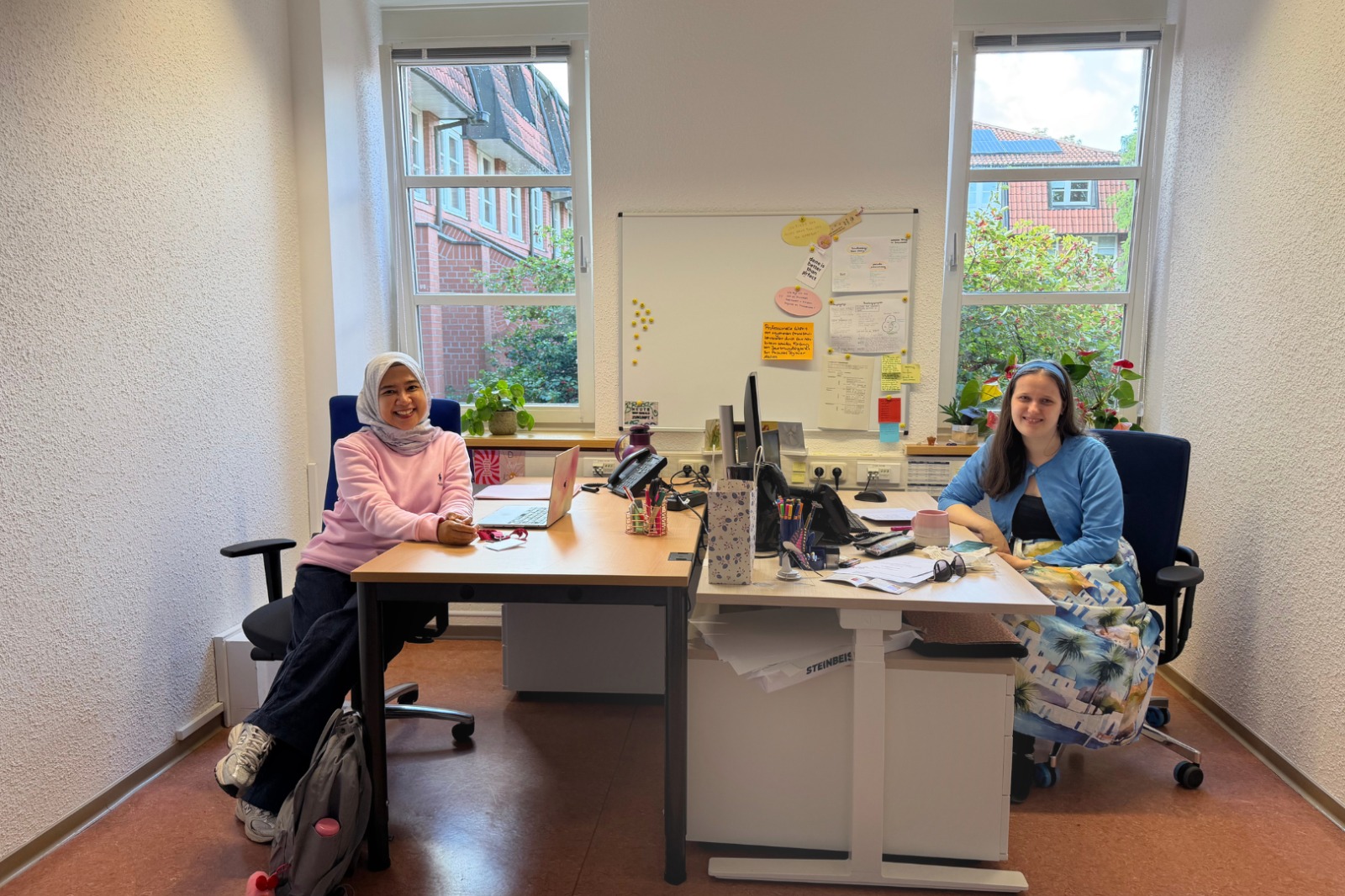
From Kassel, Bringing Knowledge Back to Unram
During the fellowship, Dr. Dewi will work within the academic environment of Universität Kassel, engaging with academics and students from diverse backgrounds. Beyond supporting the research itself, the environment will provide opportunities for exchanging ideas, accessing research resources and facilities, participating in academic discussions, and developing international networks that can support future collaborations.
For Unram, the value of the fellowship extends beyond the fellowship period itself. Dr. Dewi plans to bring back the knowledge, research experience, international networks, and good practices she gains in Germany and share them with students and colleagues at Unram.
“After this fellowship, I want to bring home not only the research findings, but also the knowledge, experience, networks, and good practices that I can share with students and colleagues at Unram,” she said.
The experience is expected to further strengthen Unram’s research culture and academic internationalisation while creating opportunities for more collaborative research that connects global perspectives with educational needs in Lombok and Indonesia.
What began as an unplanned conversation has grown into a research proposal, a fellowship, and an opportunity to build knowledge together across cultures.
“Sometimes, you don’t plan the chapter. You simply have the courage to turn the page,” Dr. Dewi concluded.