
Empowering Nyerot Farmers through Silage Technology to Strengthen Livestock Productivity and Welfare
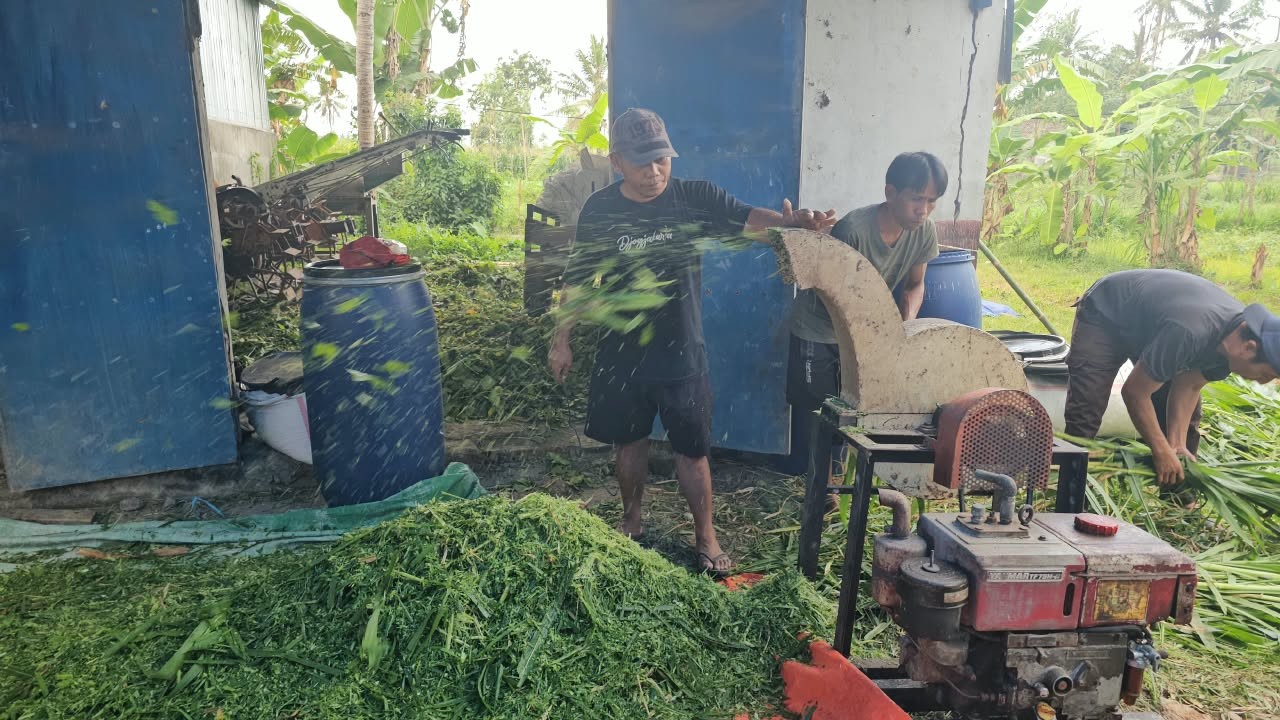
Mataram, University of Mataram — Every day, livestock farmers in Nyerot Village, Jonggat District, Central Lombok Regency, West Nusa Tenggara (NTB), must collect grass to meet their animals’ feed requirements. Their reliance on fresh forage becomes a challenge during the dry season, when grass availability declines while farmers continue to spend considerable time and effort ensuring that their livestock receive sufficient feed.
This challenge has become one of the focuses of the Professors for Impact Programme at the University of Mataram (Unram) through the initiative “Adoption and Dissemination of Feed Processing and Livestock Waste Management Technologies to Improve Farmers’ Economic Welfare in Central Lombok Regency.”
Led by Prof. Ir. Yusuf Akhyar Sutaryono, Ph.D., together with Prof. Dr. Ir. Syamsul Hidayat Dilaga, M.S.; Prof. Ir. Dahlanuddin, M.Rur.Sc., Ph.D.; Dr. Ir. Hermansyah, M.Si.; Prof. Dr. Djumardin, S.H., M.Hum.; Dr. Ir. I Wayan Yasa, S.T., M.T., IPM.; and Prof. Dr. Ir. Maskur, M.Si., the programme introduced forage preservation technology through silage production to the “Pantang Mundur” Livestock Farmers’ Group, comprising 24 farmers and 62 cattle.
From Fresh Grass to a Reliable Feed Reserve
Silage is a forage preservation technology that uses fermentation to extend the shelf life of animal feed. The method makes use of resources readily available to farmers, including elephant grass, odot grass, corn stover, and agricultural residues such as soybean waste.
During the training, forage with a moisture content of approximately 60 percent was chopped into 5–10 cm pieces and mixed with 3 percent molasses, 5 percent fine bran, and probiotics at 5 percent of the molasses quantity. For every 100 kg of silage material, for example, the mixture consists of 3 kg of molasses, 5 kg of bran, and 15 ml of probiotics. The mixture is then placed in an airtight container, such as a silo, sealed drum, or plastic bag, compacted to minimise air, and fermented for 7–14 days.
Good-quality silage is characterised by a distinctive sour fermented aroma and taste, forage that retains its green colour and visible texture, and the absence of mould, slime, or excessive clumping. With proper storage, silage can last for one to two years or longer, making it a strategic feed reserve when fresh forage becomes difficult to obtain.
“Feed technology is not simply about producing feed, but about enabling farmers to build an independent and sustainable feed supply system.”
Reducing Dependence on Daily Grass Collection
The adoption of silage is changing a feed-supply pattern that previously depended on farmers collecting grass every day. Abundant forage during the rainy season can now be processed and stored for future use, including during the dry season when grass production declines.
Having a feed reserve makes feed provision more predictable while reducing the time and physical effort farmers need to spend collecting grass. Time previously devoted to this daily activity can instead be allocated to other productive activities, while livestock feed requirements continue to be met.
More than a technical skill, the training is also encouraging farmers to rethink how local resources can be managed. Grass that was previously fed directly to livestock can now be processed into feed with a longer storage life and greater utility.
Feed Technology, Productivity, and Sustainability
A more reliable feed supply helps sustain livestock production, particularly when forage becomes limited during the dry season. This contributes to Sustainable Development Goal (SDG) 2: Zero Hunger by strengthening livestock-based food systems.
Greater efficiency in feed provision also reduces the time and physical burden on farmers and supports more productive farm management, in line with SDG 8: Decent Work and Economic Growth. Meanwhile, processing and storing forage enables local resources to be used more efficiently, supporting SDG 12: Responsible Consumption and Production.
The ability to maintain a feed reserve also strengthens farmers’ preparedness for seasonal changes in forage availability. In this context, silage technology provides an adaptation strategy aligned with SDG 13: Climate Action.
Through the Professors for Impact Programme, Unram is bringing practical technology to address challenges that farmers face in their daily lives. In Nyerot Village, grass that once had to be collected every day can now be processed into a feed reserve that can be stored and used when needed.
The shift marks a step towards a more self-reliant, efficient, and sustainable livestock system, with locally available resources becoming part of the solution.
Writer: Prof. Ir. Yusuf Akhyar Sutaryono, Ph.D.