
Unram and Sumbawa Regency Government Initiate Deer Development Program on Moyo Island
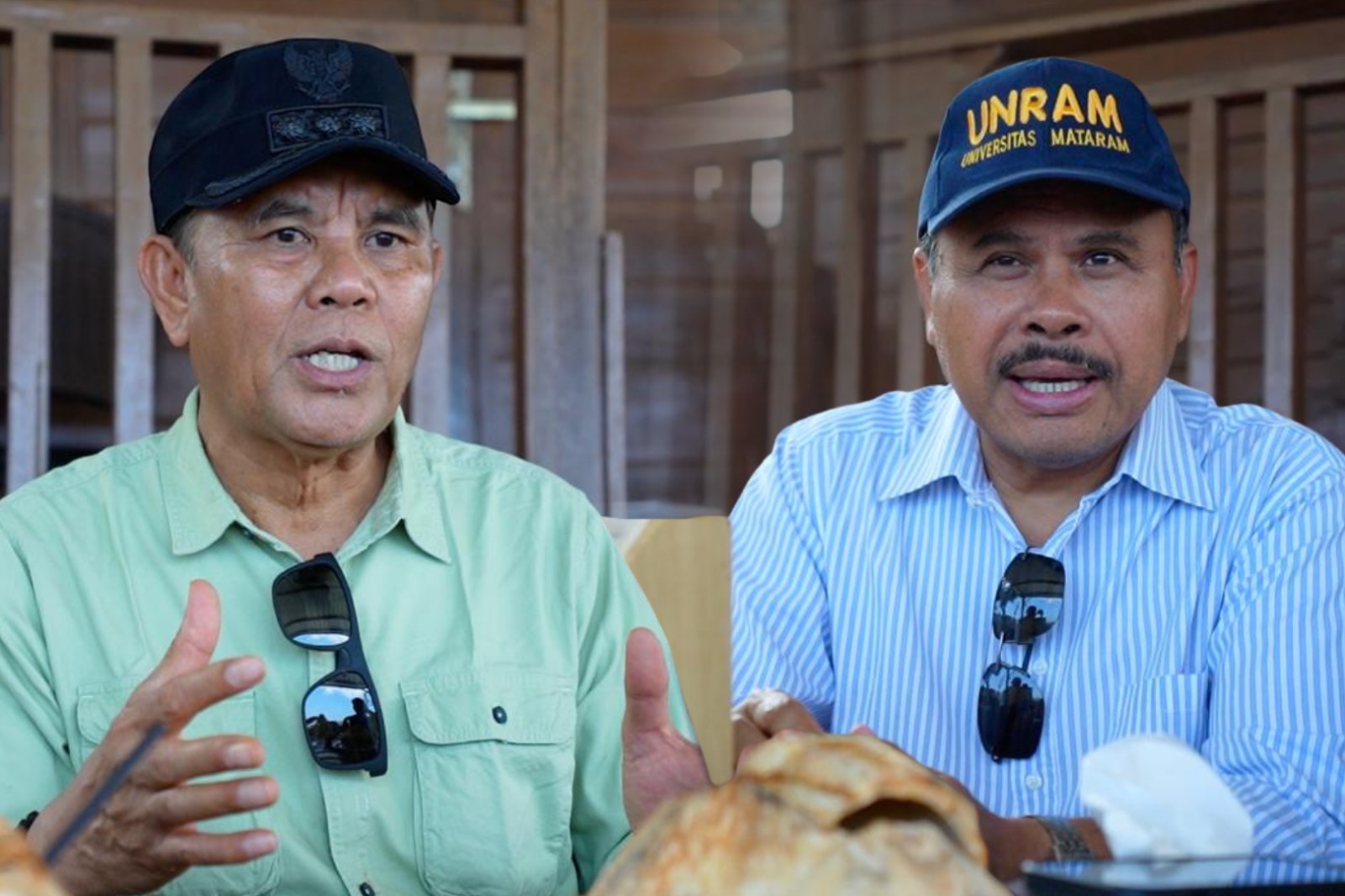
Mataram, University of Mataram — The University of Mataram (Unram), in collaboration with the Sumbawa Regency Government, has initiated a conservation and development program for deer populations on Moyo Island. This initiative, aimed at advancing biodiversity preservation and sustainable ecological management, was formally marked during the visit of Unram’s Rector, Prof. Ir. Bambang Hari Kusumo, M.Agr.St., Ph.D., together with the university’s leadership team, to Moyo Island from Thursday, August 21, to Saturday, August 23, 2025.
The Rector of Unram explained that this initiative stemmed from concerns over the declining deer population on Moyo Island, despite deer being a symbolic species of West Nusa Tenggara (NTB). “Moyo Island was once well known as a natural habitat for the growth of deer. However, their numbers have steadily declined over the years. Therefore, together with the Regent, we have taken the initiative to reintroduce breeding efforts to restore and increase the population,” he stated.
According to him, beyond conservation, deer development can also be linked to the tourism sector and the local economy. “Imagine tourists enjoying the natural landscape while feeding the deer. In the future, if regulations allow, deer could even be cultivated for commercial purposes, similar to New Zealand or Australia, where venison is highly valued and serves as an export commodity,” he explained.
During the visit, the Unram team also explored several concepts for deer management, including controlled breeding within fenced areas, artificial insemination to accelerate reproduction, and limited release programs supported by a monitoring system.
In addition to focusing on deer, the Rector of Unram also highlighted the potential of Moyo Island’s distinctive honey, which carries high economic value. Unram plans to conduct research and develop branding for the local honey to enhance its international competitiveness. “Just as Manuka honey from New Zealand commands a premium price, Moyo honey also contains unique properties beneficial to health. With proper branding and packaging, this product could significantly improve community welfare,” explained Prof. Bambang.
Echoing this, the Regent of Sumbawa, Ir. H. Syarafuddin Jarot, M.P., emphasized that the local government has also taken initial steps. He noted that there are currently more than 100 deer in the breeding facility at the Regency’s Pendopo, but the conditions there are no longer suitable.
“The population has grown quite well, but the breeding facility at the Pendopo is now overloaded. For this reason, we plan to release them back into their natural habitat on Moyo Island, which provides a highly suitable ecosystem,” he explained.
The Regent further added that the management plan goes beyond simply releasing the deer, aiming instead at sustainable cultivation that involves local communities. “We will provide training to make the deer more accustomed to human presence, so they can serve as an added tourist attraction. Visitors will be able to feed the deer at designated points that we will organize together. This initiative is not only about conservation, but also about creating new economic opportunities for the community,” he remarked.
Furthermore, the Sumbawa Regency Government is also preparing an integrated ecotourism development plan for Moyo Island, which includes the arrangement of homestays, road access improvements, and the optimization of key attractions such as Mata Jitu Waterfall. “So far, international tourists have come, but the economic impact has not been significant. With better management, we want local communities to truly benefit from it,” said the Regent.
Beyond deer and honey, the collaboration with the Sumbawa Regency Government will also extend to the development of Bali cattle farming, high-nutrition forage production, sustainable management of sengon plantations, as well as blue economy initiatives such as shrimp, lobster, and seaweed cultivation, along with solar-powered wind turbines.
Prof. Bambang underlined that these initiatives are a testament to Unram’s strong commitment to supporting development not only on Lombok but also across Sumbawa Island. “This collaboration is designed to be sustainable. With a broad pool of experts, professors, and researchers, Unram is well-positioned to contribute directly to regional progress. Our vision is for Unram to deliver real impact for society not only as an academic institution, but also as a university that builds, innov