
Unram and British Embassy Discuss Phyto-Remediation Innovation for Renewable Energy
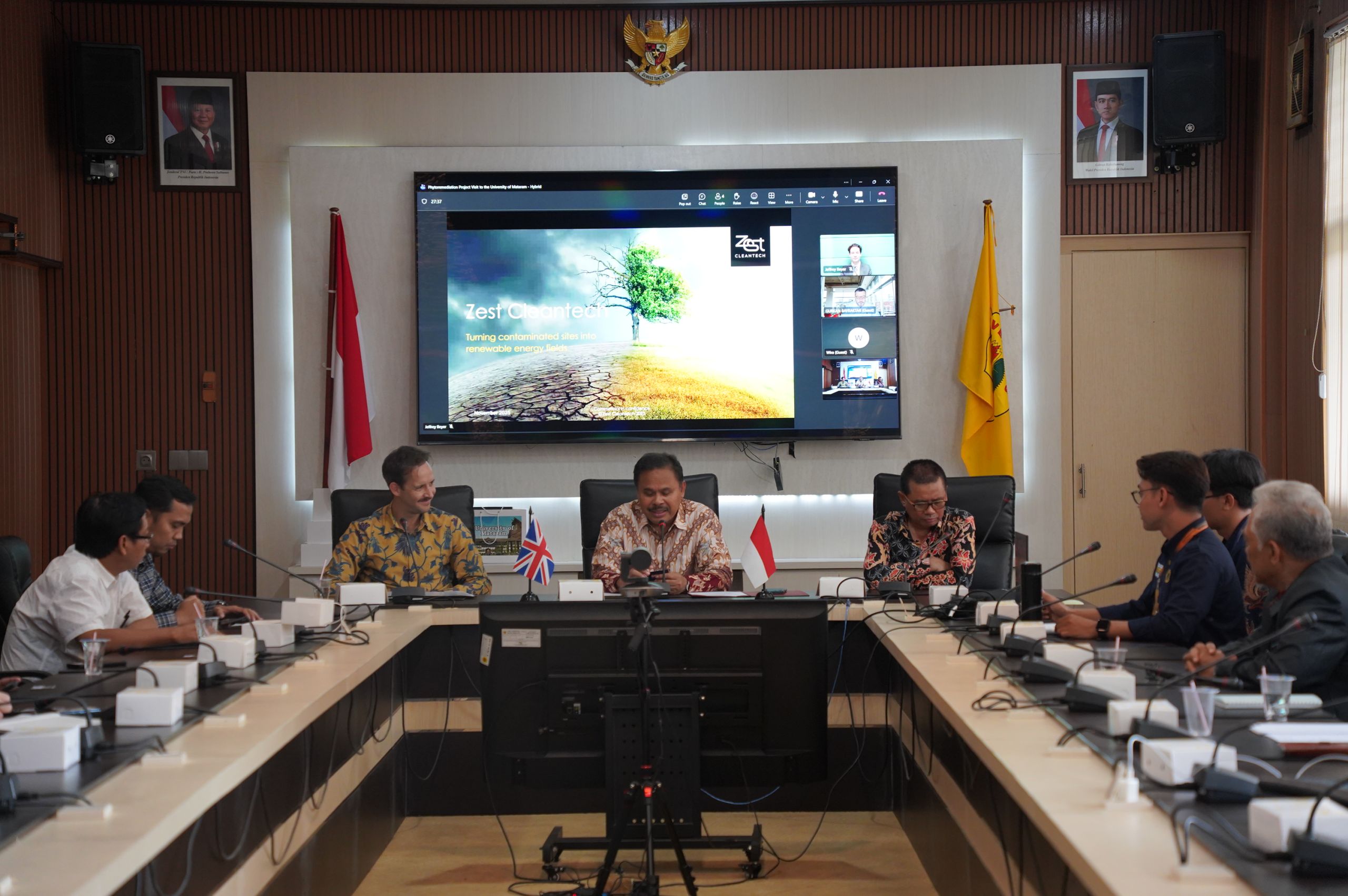
Mataram, University of Mataram – The University of Mataram (Unram) hosted the Phyto-Remediation Project Visit, an international discussion forum held on Thursday (13/11) in collaboration with the British Embassy in Jakarta, Zest Associates, Nexus 3 Foundation, and Bappenas.
The event highlighted the theme “Zest Cleantech: Turning Contaminated Sites into Renewable Energy Fields”, focusing on the application of innovative nature-based technologies to transform contaminated land into environmentally friendly renewable energy sources.
This hybrid event was attended by representatives from various institutions, including the Deputy Development Director and Head of the Development Management Unit of the British Embassy in Jakarta, Mr Freddie Brunt; a representative from Bappenas, Mohamad Firda Fauzan; and project partners from Zest Associates who joined online from the UK.
From Unram, the event was attended by the Rector of Unram, Prof. Ir. Bambang Hari Kusumo, M.Agr.St., Ph.D.; Vice Rector for Planning, Cooperation, and Information Systems, Prof. Akmaluddin, S.T., M.Sc. (Eng), Ph.D.; and Head of the Unram International Affairs Office (KUI), Prof. Dr. Dahlanuddin, M.Rur.Sc., Ph.D.
In his speech, the Rector of Unram expressed his appreciation for the trust and cooperation between Unram, the British Embassy, and international partners.
“We are very grateful for this visit and cooperation. The presence of the team from the British Embassy is an honour for Mataram University. We hope that this collaboration can strengthen research and open up opportunities for further cooperation in the future,” said Prof. Bambang.
The Zest Cleantech (Phyto-Remediation to Biogas) project is a collaboration between the UK and Indonesia that focuses on restoring land contaminated with heavy metals into a renewable energy source based on biogas. This project involves Zest Associates (UK & UAE), Nexus 3 Foundation (Indonesia), Loughborough University (UK), and Unram as a local research partner.
In his presentation, Mr. Jeffrey Beyer, Founder and Managing Director of Zest Associates, explained that the phyto-remediation technology developed aims to utilise plants to absorb heavy metals such as mercury from contaminated soil.
Plants that have undergone the cleaning process are then used as raw material for biogas production, creating a circular and sustainable approach that not only restores the environment but also produces renewable energy.
“This approach is safe, nature-based, and adaptable to local conditions. We want to prove that clean technology can simultaneously restore land, provide energy, and create new economic value for the community,” explained Jeffrey.
Meanwhile, Mr. Freddie Brunt from the British Embassy in Jakarta emphasised the importance of this project as a concrete example of strategic partnership between the UK and Indonesia in the field of clean energy.
“This phyto-remediation to biogas project is an outstanding example of innovative collaboration between the UK and Indonesia in addressing the challenges of pollution and energy transition. We see this model of cooperation as the future of our bilateral partnership,” he said.
A representative from Bappenas also said that this project is in line with the Indonesian government’s sustainable development policy.
“This innovation is a concrete solution that combines the roles of academics, government, and the private sector. This approach is not only scientifically valuable, but can also be replicated in other regions,” he said.
During the discussion session, the Rector of Unram emphasised his institution’s readiness to support the implementation of this project. Unram has adequate laboratory equipment and research expertise to analyse heavy metal content and develop clean energy research.
“We have the equipment and human resources to support this project. The challenge is how to involve the community so that they can directly benefit from the biogas energy produced,” said Prof. Bambang.
In response, Zest Cleantech expressed its appreciation for Unram’s commitment and explained that this project also opens up new economic opportunities through biogas production, carbon credit potential, and environmentally friendly remediation services.
The event then continued with a field visit to the Unram laboratory. To conclude, souvenirs were exchanged between Unram and its international partners as a symbol of friendship and ongoing collaboration.