
Unram and the JWARA Project Hold Dissemination of Research Findings on Strengthening Protection and Health for Migrant Workers in NTB
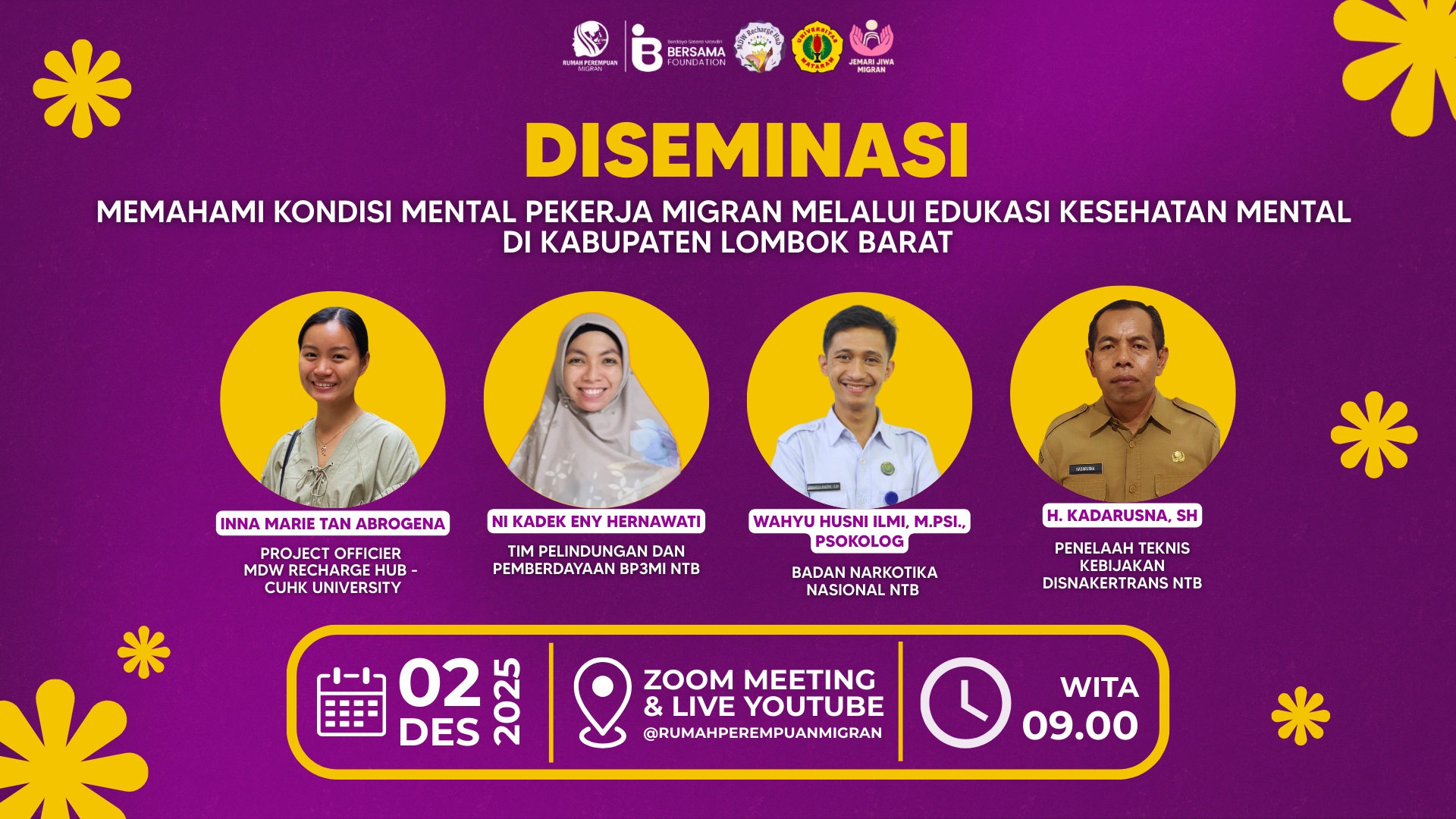
Mataram, Universitas Mataram — The University of Mataram (Unram), in collaboration with JWARA Project, Rumah Perempuan Migran, Bersama Foundation, and regional government partners, successfully held a dissemination and policy dialogue titled “Understanding the Mental Health Conditions of Migrant Workers through Mental Health Education in West Lombok Regency” on 2 December 2025. Conducted online via Zoom and streamed live on YouTube, the event served as the closing session of the JWARA Project program.
This event marked the conclusion of the JWARA Project series, which since March 2025 has carried out research, surveys, assistance, and educational activities for migrant workers and their families in Perempung Hamlet, Banyuurip Village, Gerung District an area with a significant number of Indonesian migrant workers in West Lombok Regency.
The dissemination also featured several speakers, including Inna Marie Tan Abrogena (Project Officer, MDW Recharge Hub – CUHK University), Ni Kadek Eny Hernawati (Protection and Empowerment Team, BP3MI NTB), Wahyu Husni Ilmi, M.Psi., Psychologist (National Narcotics Agency of NTB), and H. Kadarusna, S.H. (Policy Technical Analyst, NTB Department of Manpower and Transmigration).
The dissemination aimed to present field findings related to the health conditions of migrant workers from NTB and to identify various vulnerabilities they face before, during, and after working abroad. Through this forum, it is expected that a constructive dialogue can be fostered among academics, local government, and other stakeholders to formulate more responsive policy recommendations to enhance protection, well-being, and mental health literacy for migrant workers.
The discussion highlighted a range of vulnerabilities experienced by Indonesian Migrant Workers from NTB, particularly concerning psychological readiness, limited access to information, and the gap between expectations and the realities of working conditions in destination countries.
These findings underscore the urgency of strengthening comprehensive migration literacy prior to departure, covering understanding of employment contracts, basic rights, complaint mechanisms, and mental health management. In addition, cross-sectoral synergy is needed, engaging local governments, BP3MI, health service institutions, and civil society organizations to ensure continuous support for migrant workers and their families.
The discussion concluded that enhancing the protection and well-being of Indonesian Migrant Workers requires close collaboration among multiple stakeholders. The approach must also emphasize prevention, including ensuring mental health support for PMI and their families.
These efforts begin with strengthening comprehensive migration literacy before departure, which includes understanding employment contracts, basic rights, complaint mechanisms, and mental health management to ensure the physical and psychological readiness of Migrant Workers before leaving, while working abroad, and upon returning to their home regions.