
4.0 GPA? Bring It On! Laksmi Proves Women Can Excel in Engineering and Beyond
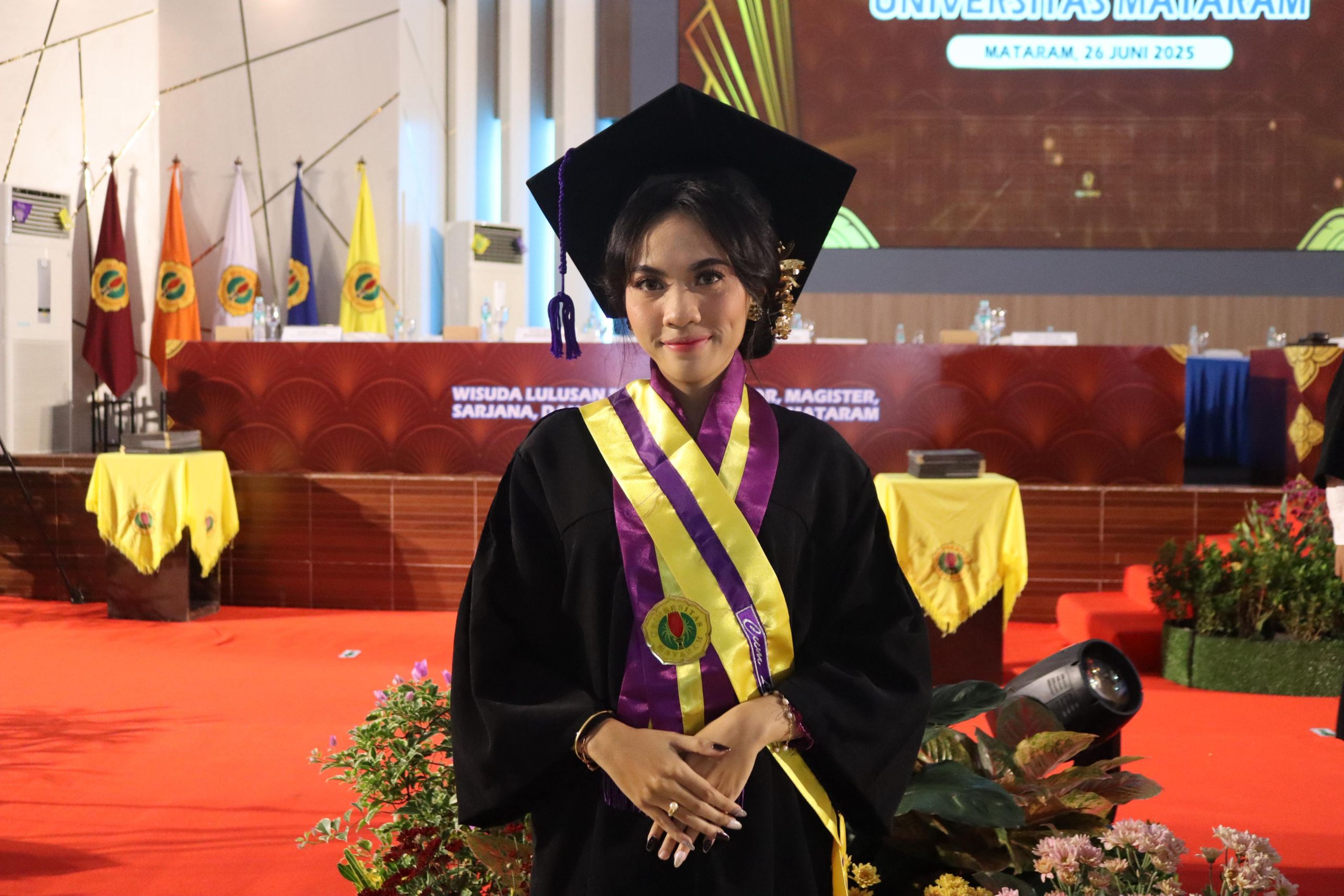
Mataram, University of Mataram – A 4.00 GPA in a Master of Engineering programme? ‘Impossible’ for many people, but Laksmi has turned that perception on its head. This woman, born in Mataram, not only achieved a perfect GPA, but also racked up a host of other achievements. Read her story, which breaks stereotypes and inspires the engineering generation at the University of Mataram (Unram).
Ni Ketut Laksmi Grahestika, M.T., is a graduate of the Bachelor of Civil Engineering programme at Unram and decided to pursue her Master of Civil Engineering at the Faculty of Engineering, Unram, as she felt it was a good fit.
“Since I had already studied at Mataram University for my Bachelor’s degree, I felt comfortable with the learning system and the faculty members. Additionally, the Master’s programme in Civil Engineering at Unram is now accredited as Superior, which reassured me that the programme continues to develop and is committed to maintaining high academic standards. I entered the Master’s programme in Civil Engineering through the Fast Track programme (an accelerated programme that begins in the 7th semester of the Bachelor’s programme). With the opportunity to continue the Master’s programme provided by the faculty and university, I took it to further explore civil engineering with a focus on water resources,” explained Laksmi.
Achieving a perfect GPA despite the perception that engineering is a “masculine world”, Laksmi proves that achievement knows no gender, as there are many women now entering the field of engineering.
“When we demonstrate dedication and competence, we will be accepted and valued. I hope more women will gain the confidence to take on roles in this field,” Laksmi stated.
Starting her master’s programme at the beginning of 2024 at Unram, she successfully completed her studies in less than two years and participated in the graduation ceremony in June 2025, which graduated 1,175 students, on Thursday (26/6) at the M. Yusuf Abubakar Auditorium. At the graduation ceremony, Laksmi was recognised as one of the top graduates with a perfect GPA of 4.00.
During her master’s studies, Laksmi certainly faced several challenges. ‘During the first semester of my master’s programme, when I was still an undergraduate student and had no work experience, there were many things I needed to learn during master’s class discussions, and I was not afraid to ask questions when I needed help,’ said Laksmi.
The graduate of the Civil Engineering programme shared his tips and tricks for achieving a cum laude predicate, such as being consistent, actively participating in discussions, being good at time management, and most importantly, enjoying the learning process.
“I tried to be consistent in my studies, asking questions to lecturers, seniors, and friends if there were things I didn’t understand, and maintaining good time management. What’s most important is that I enjoy the learning process, not just focusing on the results. I strive to complete assignments to the best of my ability,” explained Laksmi.
During her master’s programme, she focused more on academics and deepening her knowledge of civil engineering. For her, being able to complete her studies to the best of her ability while maintaining her passion for learning is something she is deeply grateful for and proud of.
For Laksmi, as a woman in a male-dominated civil engineering environment, she had to be adept at adapting.
“As a woman in an engineering environment, we do have to be smart about adapting and building good communication. I learned the importance of good coordination, especially when working with male colleagues in a team,” she said.
Going forward, Laksmi plans to apply the knowledge she has gained to support her work.
“Coincidentally, I already work at an institution closely related to the education programme I took. The knowledge I gained during the two years of this Master’s programme greatly supports my work and is in line with my field of expertise. What I learned in the Civil Engineering Master’s Programme at University of Mataram is certainly useful in the workplace,” she added.
“Everything will seem difficult if we haven’t tried it yet. But if we are willing to learn and dedicate ourselves, nothing is truly difficult, and we shouldn’t be afraid to ask questions,” Laksmi advised female students who are still hesitant to pursue engineering due to fear or perceived difficulty.
Lastly, Laksmi hopes that the field of civil engineering, especially at Unram, can continue to grow. In this digital age, the application of engineering knowledge in the field can become more effective and efficient if we can utilise it properly.