
Deputy Minister for Diktisaintek emphasizes impactful campus, Unram encourages universities in NTB to collaborate
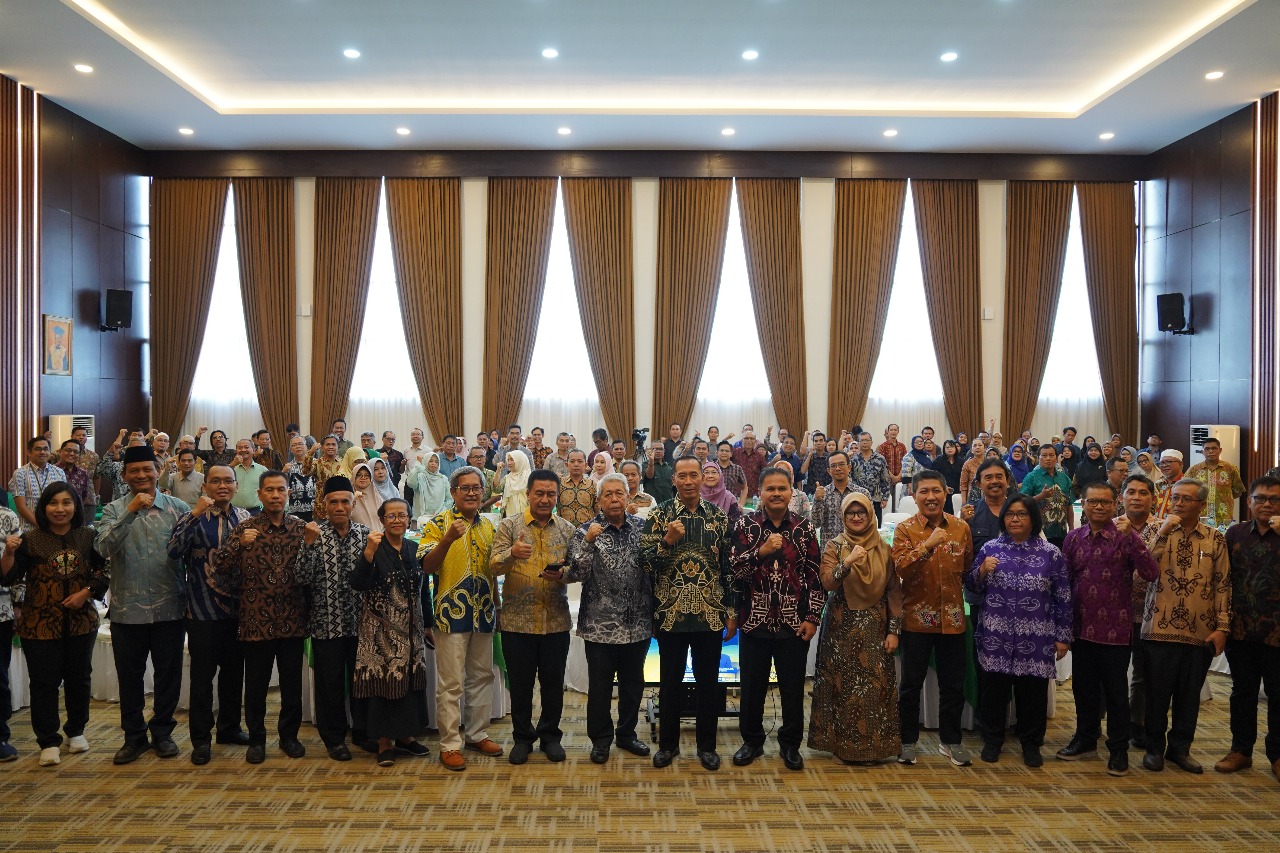
Mataram, University of Mataram – University of Mataram (Unram) once again showed its role as one of the driving forces for the advancement of higher education in West Nusa Tenggara (NTB) through a Sharing Session with the Deputy Minister of Higher Education, Science and Technology, Prof. Dr. Fauzan, M.Pd. on Saturday, April 19, 2025 at the Senate Conference Room, Unram Rectorate.
The activity which was attended by the Rectors of State Universities (PTN) and Private Universities (PTS) throughout Lombok Island was a strategic platform for all higher education stakeholders in NTB to discuss, share insight, and strengthen collaboration in realizing an impactful campus, a campus that is not only academically superior, but also able to answer social, economic, and regional development challenges.
Rector of Unram, Prof. Ir. Bambang Hari Kusumo, M.Agr.St., Ph.D., in his speech conveyed the importance of this forum as a momentum to explore the latest directions and policies from the Ministry to support the direction of higher education development in the future.
“We will listen to the presentation from the Deputy Minister of Higher Education Science and Technology. Hopefully there will be lots of things that we can explore regarding building impactful universities. Unram and other universities in Lombok are ready to collaborate,” said Prof. Bambang.
The Rector of Unram emphasized that universities should not become ivory towers that look magnificent but lack contribution to society. Unram, he continued, has implemented a thematic approach in the KKN program, which specifically targets local issues such as poverty, stunting, public health, and the development of local potential, in collaboration with regency / city and provincial governments to create an impactful campus.
“We have also established partnerships with the Government of Central Lombok Regency and the Government of West Sumbawa Regency to ensure the availability of doctors in the regions through partnership programs. This program will also be expanded together with the Government of Sumbawa Regency,” said Prof. Bambang.
The Head of the NTB Provincial Youth and Sports Office, Drs. Tri Budiprayitno, M.Si., on behalf of the NTB Governor in his speech expressed his high appreciation to Unram as the host for initiating this important forum.
Furthermore, Tri said that what was conveyed by the Rector of Unram was in line with the local government’s vision for universities to become a beacon of change and become a center for the development of appropriate information technology and the development of superior resources that are ready to compete in the global era.
Through BRIDA NTB, the provincial government opens opportunities for collaboration, both in the form of regulatory support, facilitation and cross-sector partnerships in facing the challenges of digital transformation, technological destruction, and the urgency of building a knowledge-based economy and sustainability.
“NTB is ready to become a strategic partner of the ministry in strengthening the higher education ecosystem that is relevant to local and national needs,” he concluded.
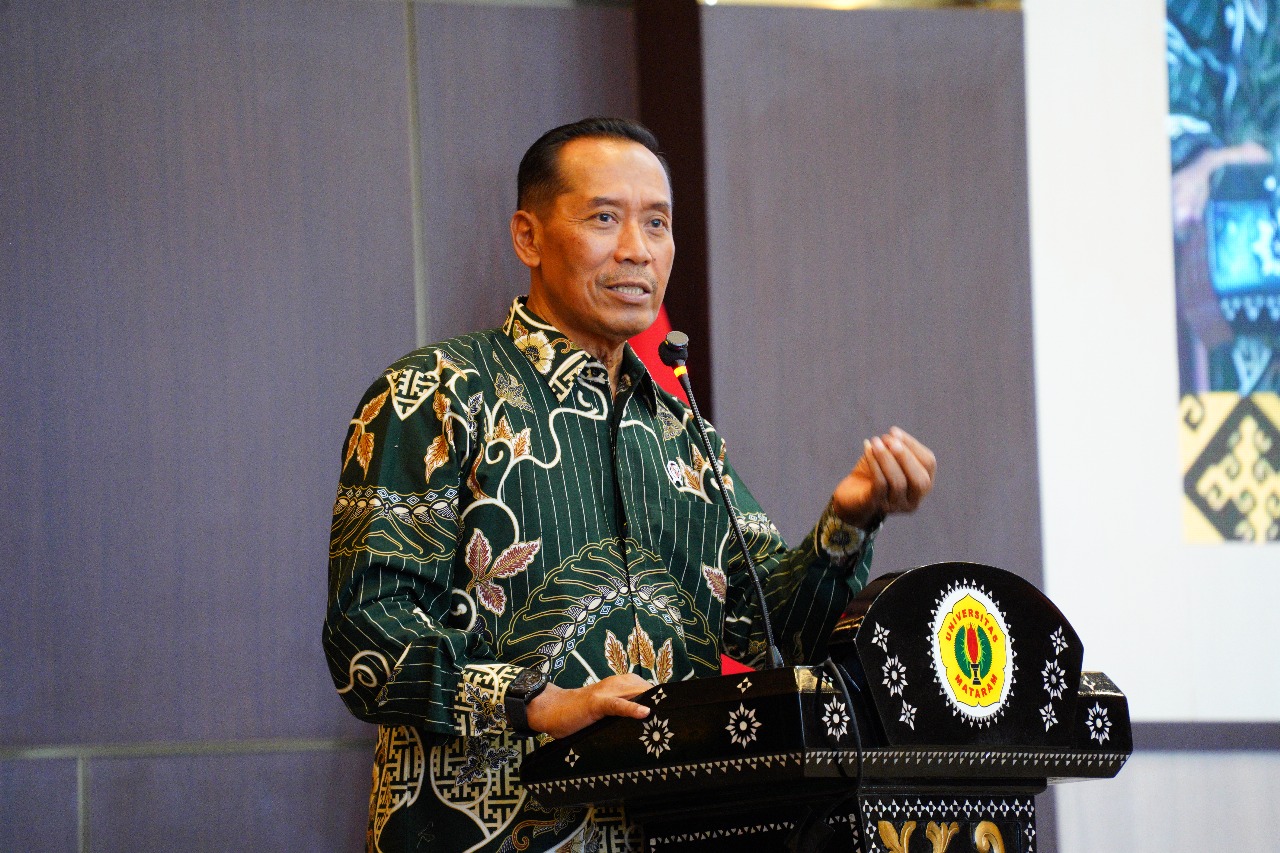
Deputy Minister of Higher Education, Science and Technology, Prof. Dr. Fauzan, M.Pd. in his presentation invited all higher education leaders to conduct self-introspection of the role and impact of the institutions they lead.
“We as higher education leaders must be able to read the real conditions of society. Let us not forget our core activity, which is to build students into a superior generation. This must be translated descriptively in campus programs and policies,” he said.
Prof. Fauzan further highlighted that so far universities tend to produce generic graduates, while the world of work and development challenges have changed considerably. He encouraged the campus to design more specific and professional study programs based on sectoral needs.
According to him, students with specific competencies will be more confident and ready to enter the workplace. Therefore, universities are required not only to be academically responsible, but also socially responsible and ensure that the presence of the campus really answers the needs and potential of the surrounding community.
Prof. Fauzan also explained the concept of impactful campus, which is a model of higher education that does not only stop at scientific publications or academic work, but is present institutionally and consistently in encouraging regional development. He emphasized the importance of collaboration between campuses, local governments, businesses, and industries so that regional development such as NTB can be accelerated and more inclusive.
Deputy Minister Fauzan closed with an encouragement for all campuses to increase the sense of social in designing policies and programs, so that the existence of universities really has a direct impact on improving the quality of life of the community and regional progress.
With the spirit of collaboration, this discussion highlighted the importance of higher education governance that is adaptive, relevant, and has a direct impact on regional development, especially in NTB.