
Ecobricks by Unram Students and SDN 24 Mataram Transform Plastic Waste into Reading Corner Table
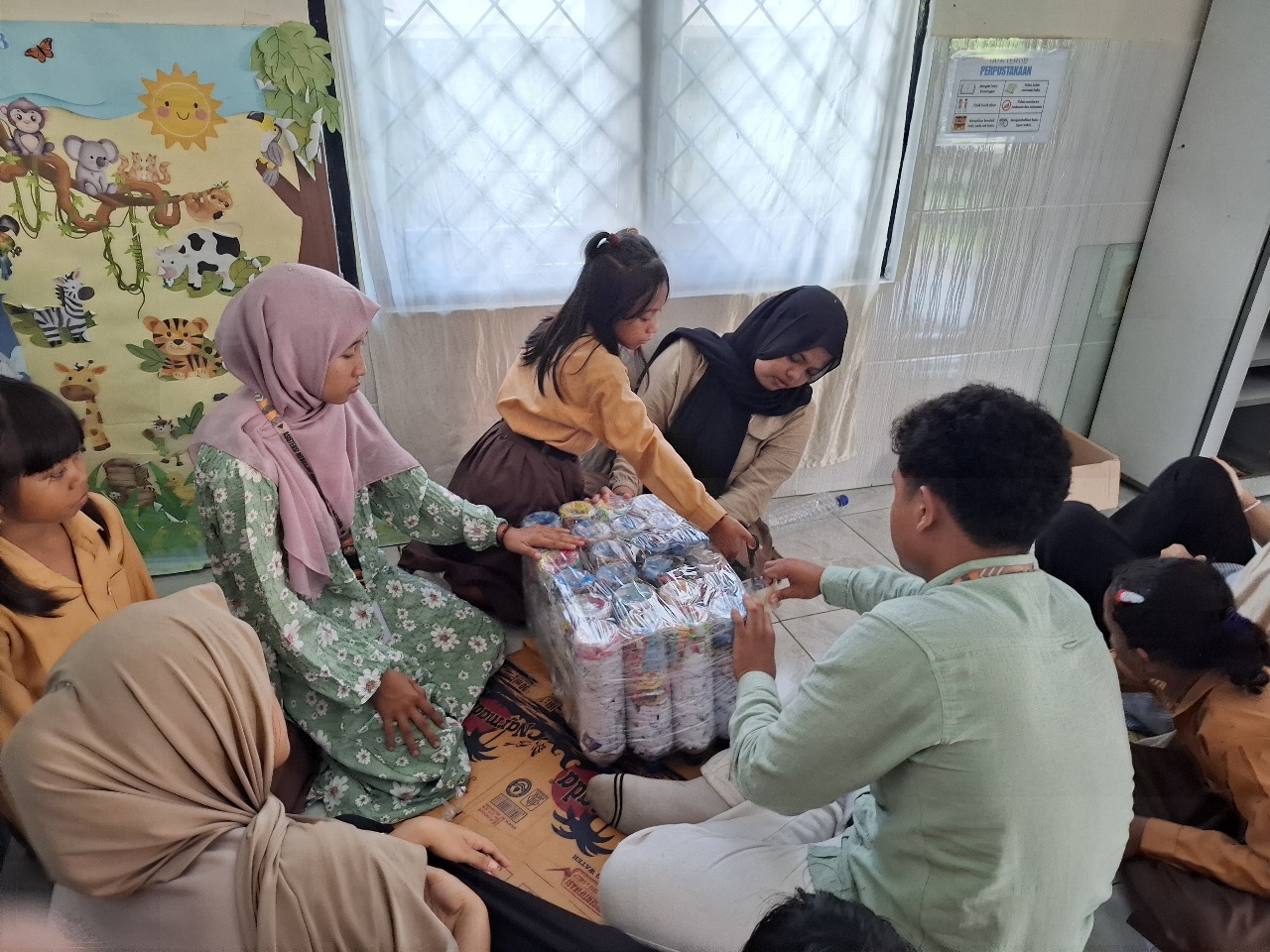
Mataram, University of Mataram – Students participating in the Teaching Assistance Program at SDN 24 Mataram successfully initiated a creative project by turning plastic waste into ecobricks, which were then assembled into a reading corner table for the students. The activity, which ran from May to June 2025, not only promoted environmental awareness but also introduced early recycling practices to children.
Ecobricks a combination of “eco” (environmentally friendly) and “brick” are made by tightly stuffing used plastic bottles with non-organic waste. These bricks are then repurposed into functional furniture, such as the reading table now featured in the school’s library.
“This program is a first step in instilling sustainable habits in children. We hope they grow into environmentally conscious agents of change,” said Huzaematul Huriah, one of the Teaching Assistance student volunteers.
Dr. Prayogi Dwina Angga, S.Or., M.Pd., the Field Supervising Lecturer, expressed his pride in the initiative. “This is a concrete example of how education doesn’t only happen in the classroom, but also through real action. Ecobricks are not just a solution for plastic waste they are also a powerful educational tool for the younger generation,” he said.
“The ecobrick program proves that environmental education must start with simple actions. Involving children in the recycling process not only enhances their creativity, but also builds a sense of responsibility toward the Earth. This is an investment in a greener future,” he added.
The ecobrick-making process involves cleaning and drying plastic waste, then compacting it tightly into bottles until firm. The resulting bricks are sturdy and can be used for various purposes, such as chairs, flower pots, or even small walls.
This activity is expected to help shape students’ mindset about the importance of waste management and creating a cleaner environment. “We want the children to see that waste can have value if managed creatively,” Huzaema added.
Fostering a collaborative spirit, the program yielded not only functional products but also long-lasting environmental values that students can carry into their future lives.