
Unram National Seminar Highlights the Role of Youth in Addressing the Climate Crisis
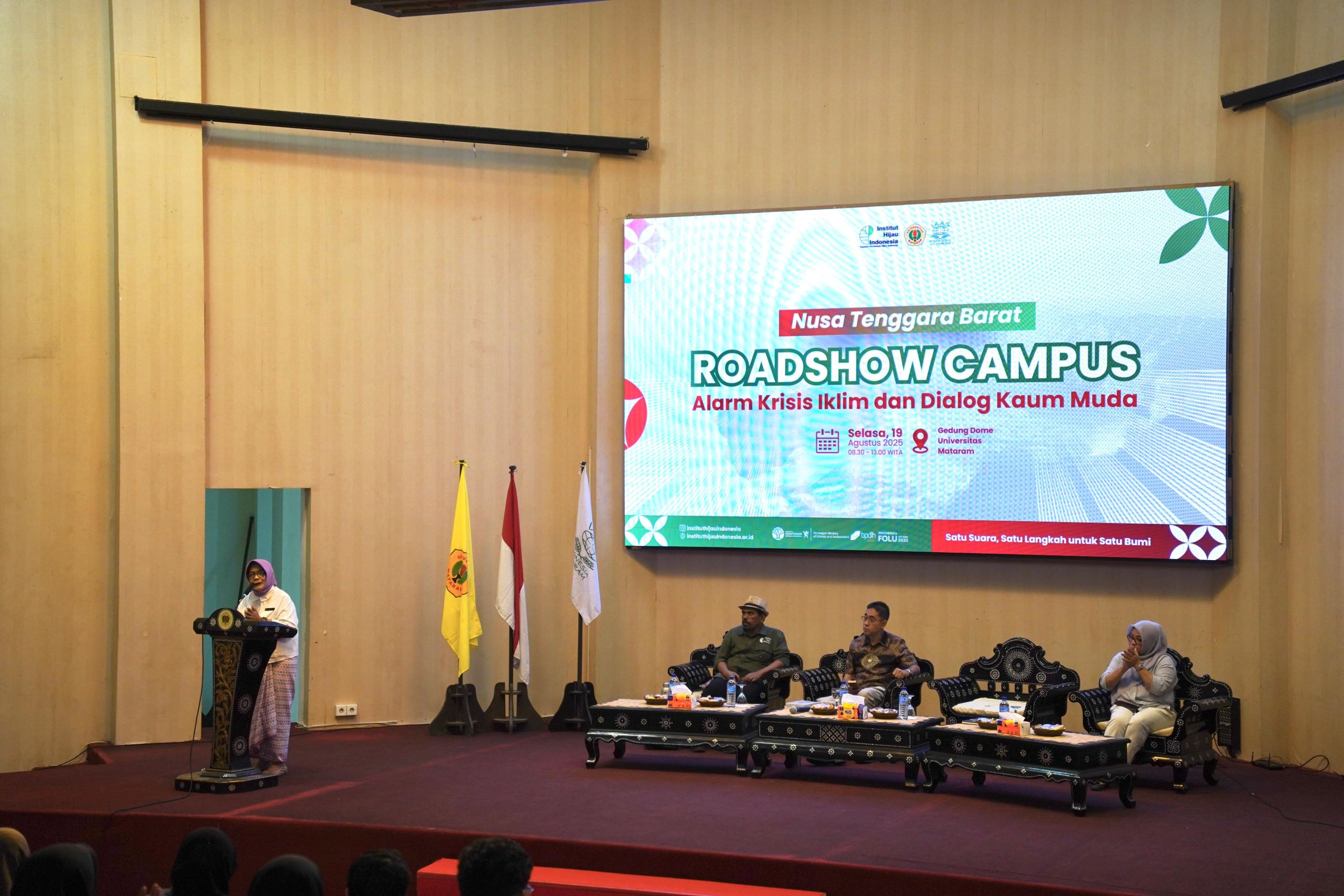
Mataram, University of Mataram – IAAS Indonesia LC University of Mataram (Unram), in collaboration with the Green Institute of Indonesia (IHI), organized the National Seminar: Climate Crisis Alarm and Youth Dialogue on Tuesday, August 19, 2025, at the Dome Hall of Unram. The seminar aimed to raise awareness and strengthen youth movements in addressing climate challenges.
The event was part of the Campus and Youth Community Roadshow, designed to build awareness and foster youth engagement in responding to the climate crisis. It provided an inclusive dialogue platform that brought together students, academics, policymakers, and civil society organizations, encouraging young people not only to act as recipients of information but also as active agents of change in driving climate solutions.
In her remarks, Vice Rector for Academic Affairs of Unram, Prof. Dr. Sitti Hilyana, expressed her appreciation for the initiative of IAAS Indonesia LC Unram and IHI in engaging youth on critical issues such as the climate crisis. She emphasized that the role of students goes beyond academic activities in the classroom and must also extend to global issues that directly affect the nation’s future.
“Students should not be viewed merely as recipients of information, but as proactive agents of change who will help shape the nation’s future. By actively engaging in dialogue and concrete initiatives addressing the climate crisis, I am confident that these challenges can be managed more effectively than ever before,” she affirmed.
Prof. Nana also emphasized the crucial role of universities in responding to climate change and promoting environmental sustainability. She noted that higher education institutions are not only tasked with producing graduates but must also serve as driving forces for innovation and technological development that can be directly applied within society.
According to her, the mandate given by the government to universities includes supporting the achievement of sustainable development goals, particularly in addressing the climate crisis, which is closely linked to issues such as the environment, energy, water, poverty, and natural resource governance.
“The University of Mataram occupies a strategic position endowed with extraordinary ecological wealth, ranging from Mount Rinjani to coastal and marine areas. This potential should be leveraged as a living laboratory for students to engage with and develop solutions to climate challenges,” she stated.
The seminar was prompted by the increasingly evident environmental and climate crises. Indonesia, home to the world’s third-largest tropical forest, plays a critical role in the global climate agenda through the Forestry and Other Land Use (FOLU) Net Sink 2030 target. However, deforestation, land degradation, pollution, and weak environmental governance remain significant challenges.
In addition, Indonesia faces a Triple Planetary Crisis climate change, pollution, and biodiversity loss which directly impacts vulnerable groups, including farmers, fishers, women, indigenous communities, and the youth. This situation underscores the importance of youth voices, as they are both among the most affected and hold great potential to drive innovative solutions.
The Environmental Outlook 2024 report by IHI highlights the strong concern of youth regarding environmental issues. Among 28,763 respondents across 34 provinces, the most pressing issues identified were waste management (28%), environmental pollution (18.5%), low participation and education (15.4%), climate change (13.5%), weak environmental policies (7.8%), deforestation and biodiversity loss (11.1%), and increasing ecological disasters (5.8%).
This activity served not only as a platform for dialogue and education but also as part of a collective commitment to ensure that Indonesia’s environmental future is shaped with the full participation of its youth. Through this initiative, IAAS Indonesia LC Unram and IHI contribute to the achievement of the Sustainable Development Goals (SDGs), particularly Goal 13 on Climate Action, by positioning youth as key drivers of change toward a more inclusive and sustainable development.