
FHISIP Communication Studies Program Holds Curriculum Reconstruction Workshop to Strengthen Global Competitiveness
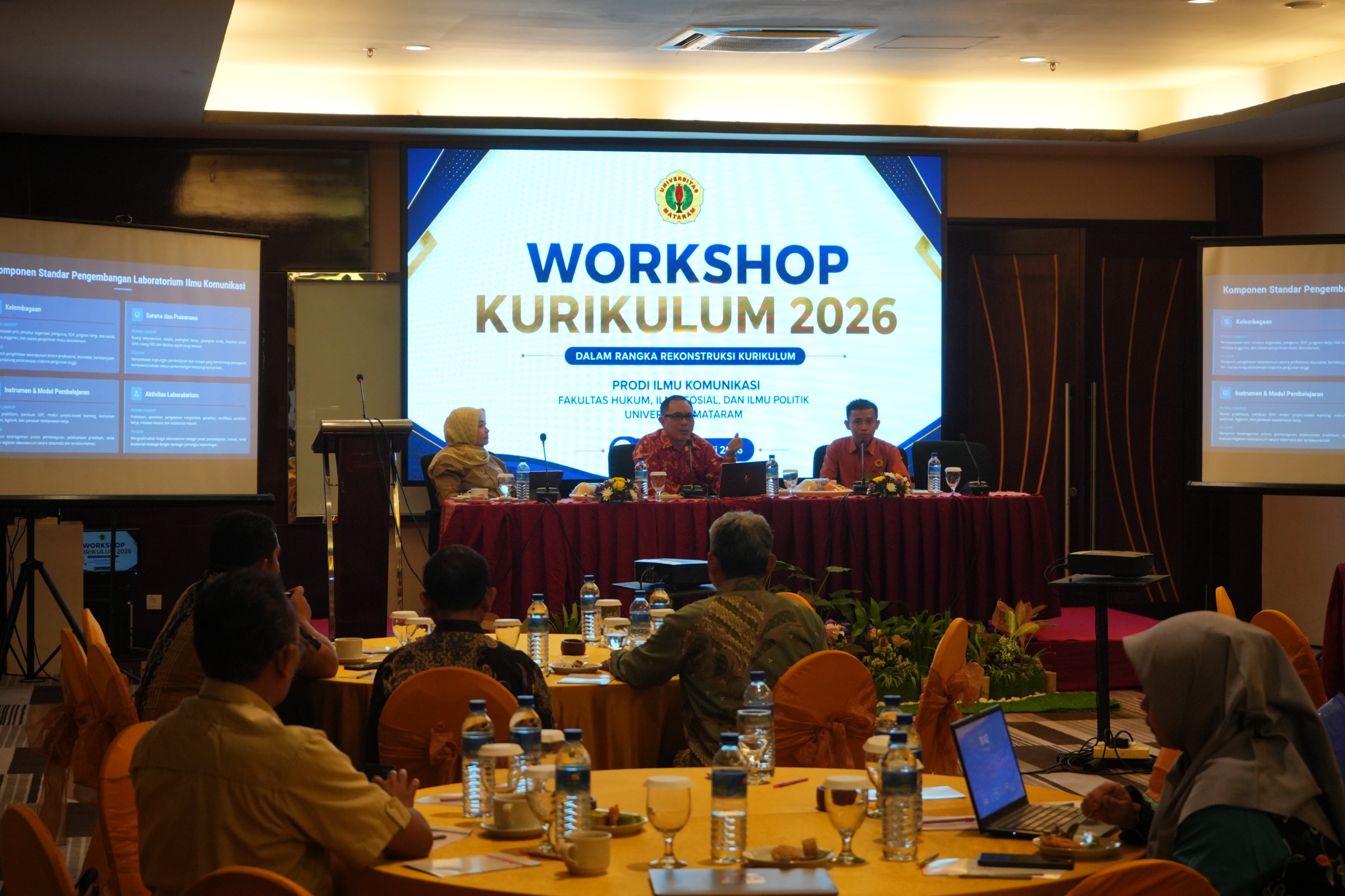
Mataram, University of Mataram — The Communication Studies Program of the Faculty of Law, Social and Political Sciences (FHISIP) at the University of Mataram (Unram) held a Curriculum Reconstruction Workshop at the Golden Palace Hotel on Thursday (July 30) as part of its efforts to develop a curriculum that is responsive to technological advancements, industry demands, and higher education standards.
The workshop was attended by the Dean of FHISIP, the Vice Dean for Academic Affairs, the Curriculum Coordinator of the Indonesian Association of Communication Higher Education (ASPIKOM), Prof. Dr. Catur Suratnoaji, S.Sos., M.Si., the Dean of the Faculty of Communication Sciences, Universitas Padjadjaran, Dr. Nindi Aristi, S.Sos., M.Comn., coordinators of study programs within FHISIP, industry partners—including Nutrifood, JMSI, and Nomad Sense—as well as alumni and lecturers from the Communication Studies Program.
In his presentation, Prof. Catur Suratnoaji emphasized that curriculum transformation is essential to producing graduates who are adaptive and globally competitive. He explained that changes in higher education policies, rapid advances in digital technology, and evolving workforce demands require study programs to continuously update their curricula.
“Curriculum transformation must respond to the changing landscape of digital media, strengthen digital literacy, and integrate emerging technologies such as Artificial Intelligence (AI) into the learning process,” he said.
He also encouraged the Communication Studies Program to strengthen its distinctive identity by emphasizing competencies in tourism communication and disaster communication as unique graduate profiles that differentiate it from similar programs.
Meanwhile, Dr. Nindi Aristi highlighted the importance of developing a curriculum based on Outcome-Based Education (OBE), which emphasizes alignment between learning outcomes, teaching and learning processes, and assessment methods. According to her, learning should be student-centered, supported by transparent assessment practices and constructive feedback that promotes continuous competency development.
Dr. Nindi further noted that the integration of AI into education should be embraced positively while maintaining the highest standards of academic integrity.
“AI can enhance the efficiency of learning, but creativity, critical thinking, and originality must remain the core competencies of every graduate,” she explained.
Through this workshop, the FHISIP Communication Studies Program gathered input from academics, professional associations, industry partners, and alumni to support the development of a curriculum that is more relevant, adaptive, and aligned with the needs of today’s workforce. The revised curriculum is expected to produce graduates who are competitive, impactful, and well prepared to address communication challenges in the digital era.