
Unram Strengthens Outcome-Based Education Implementation through FT Curriculum Reconstruction Workshop

Mataram, University of Mataram — The University of Mataram (Unram) continues to strengthen its commitment to improving the quality of higher education through the implementation of Outcome-Based Education (OBE). This commitment is demonstrated through the organization of a Curriculum Reconstruction Workshop for the Mechanical Engineering Study Program, held by the Faculty of Engineering of Unram on Friday (17 April) at Hotel Puri Indah, Mataram.
The activity represents a strategic effort to ensure that the implemented curriculum aligns with the needs of the labor market, developments in industry, and the demands of global competencies.
In his remarks, the Dean of the Faculty of Engineering of Unram, Ir. Muhamad Syamsu Iqbal, S.T., M.T., Ph.D., emphasized that study programs serve as the frontline of curriculum implementation at the university level. He noted that the Faculty of Engineering is currently developing a master’s (S2) program as part of its efforts to strengthen academic capacity.
He further highlighted that the Industrial Engineering Study Program’s achievement of ranking 7th nationally in the SNBP admission track, placing it among the top 10 programs nationwide, reflects the faculty’s growing competitiveness and opens opportunities for increasing student intake capacity in the future.
Meanwhile, the Rector of Unram, Prof. Dr. Sukardi, M.Pd., emphasized that higher education graduates must demonstrate measurable competitiveness, reflected in three key indicators: successful employment in the workforce, continuation to higher levels of study, or the ability to create employment opportunities independently. According to him, the engineering field holds significant potential to address these challenges due to its applied nature and strong alignment with industry needs.
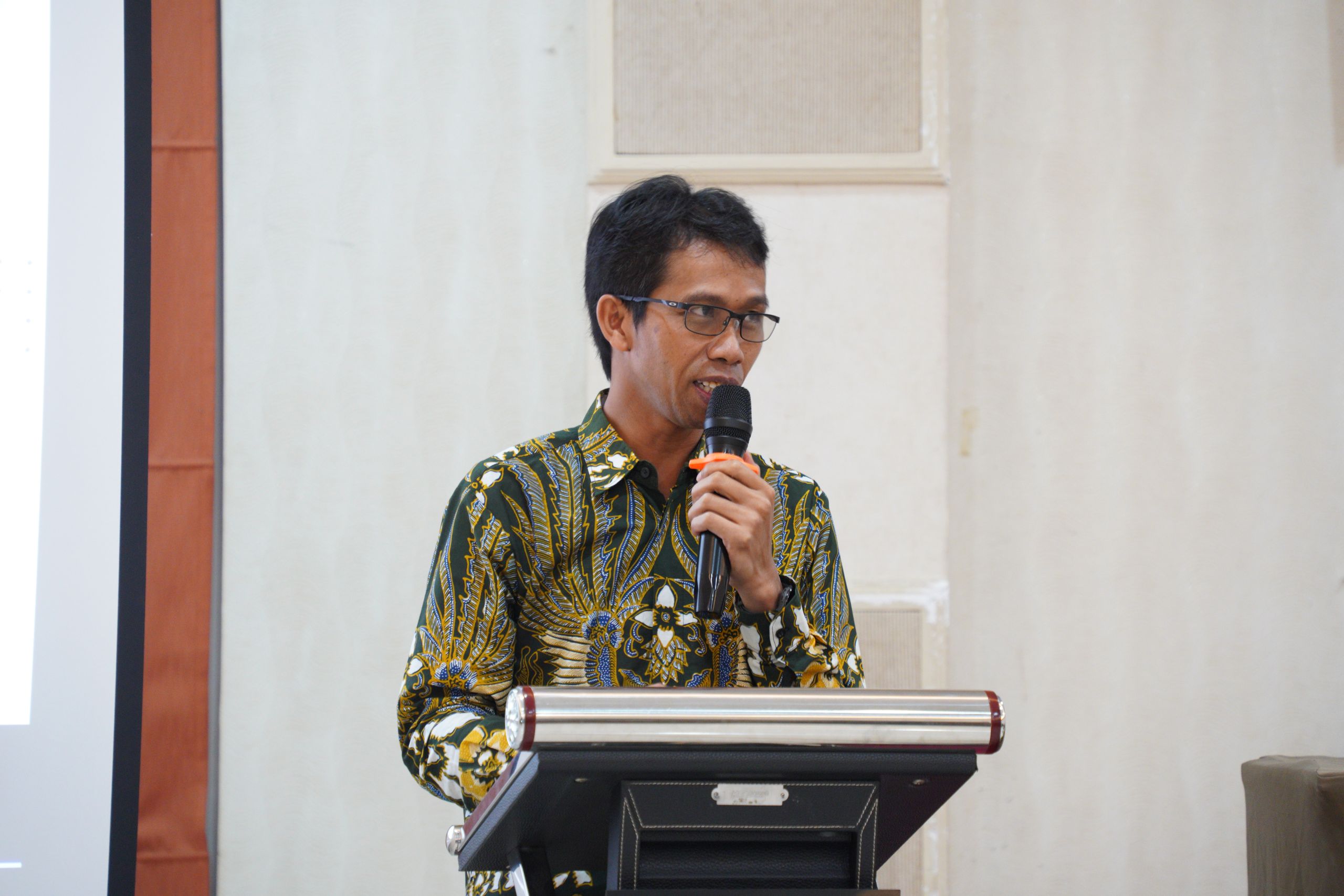
Rector Prof. Sukardi further emphasized that the curriculum must be aligned with graduate competitiveness and the needs of the labor market and industry. This alignment is pursued through strengthening academic transformation, partnerships with state‑owned enterprises (BUMN) and the industrial sector, mandatory internships and field experiences, the development of hard skills, soft skills, and digital skills, as well as supported by students’ ownership of competency certificates.
The 11th Rector of Unram also underscored the importance of building co‑creation between universities and industry so that students have strong connectivity with the world of work. “The relevance between graduate competencies and industry needs must be a primary concern. This requires strengthened collaboration with state‑owned enterprises, industry, and local government,†he affirmed.
Furthermore, the Rector encouraged the strengthening of supporting aspects, such as the development of competency certification for students prior to graduation, as well as participation in national and international competitions. These steps are considered essential to build confidence while enhancing the global competitiveness of graduates.
In addition, he opened opportunities for the implementation of innovations from the Faculty of Engineering, including technology‑based waste management within the campus environment, as part of Unram’s tangible contribution to sustainable development.
This workshop is expected to serve as a strategic step in aligning the Outcome‑Based Education (OBE) curriculum with the needs of business and industry, in line with contemporary developments, while reinforcing Unram’s role in producing graduates who are adaptive, competitive, and impactful.